Birmingham & the Midlands
Road & Yard
Tarmac Surfacing
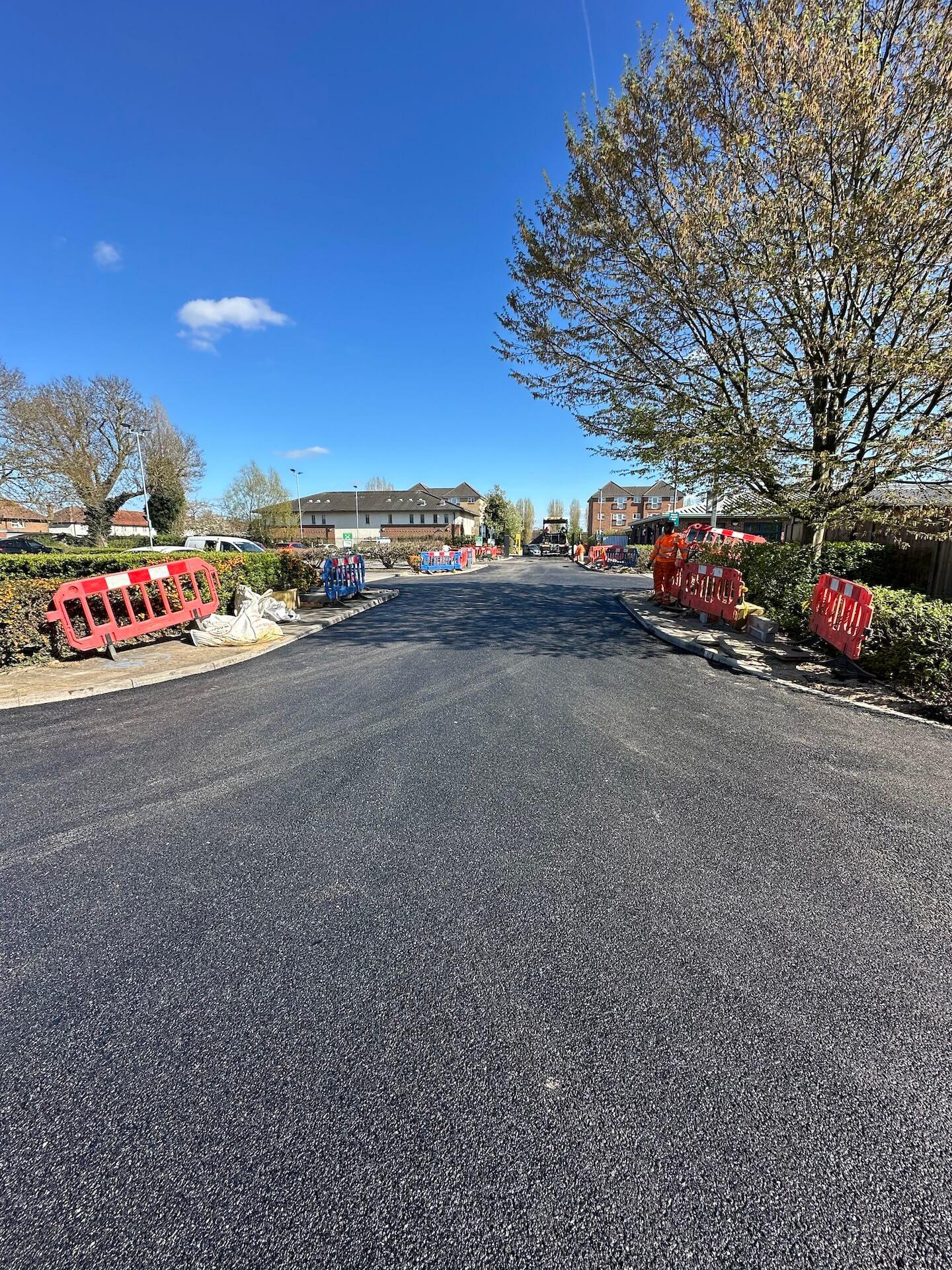
New tarmac surfaces, full resurfacing and repairs for roads, yards, factory accesses, farm tracks and forecourts across Birmingham and the Midlands.
New tarmac surfaces, full resurfacing and repairs for roads, yards, factory accesses, farm tracks and forecourts across Birmingham and the Midlands.
At M Calladine Groundworks, we carry out complete tarmac surfacing projects from the ground up. Whether you need a fresh car park, a new factory yard, a farm access road or a commercial forecourt, we have the experience, equipment and expertise to deliver a surface that lasts.
A good tarmac surface isn't just about what goes on top — it's about what's underneath. We always assess the existing ground conditions, carry out any necessary groundworks, lay the correct sub-base and use the right tarmac specification for your traffic type and use case. No shortcuts.
From small commercial yards to large industrial resurfacing projects, we've worked on all kinds of sites across Birmingham and the wider Midlands. Our team is experienced, professional, and gets the job done with minimal disruption to your business or property.
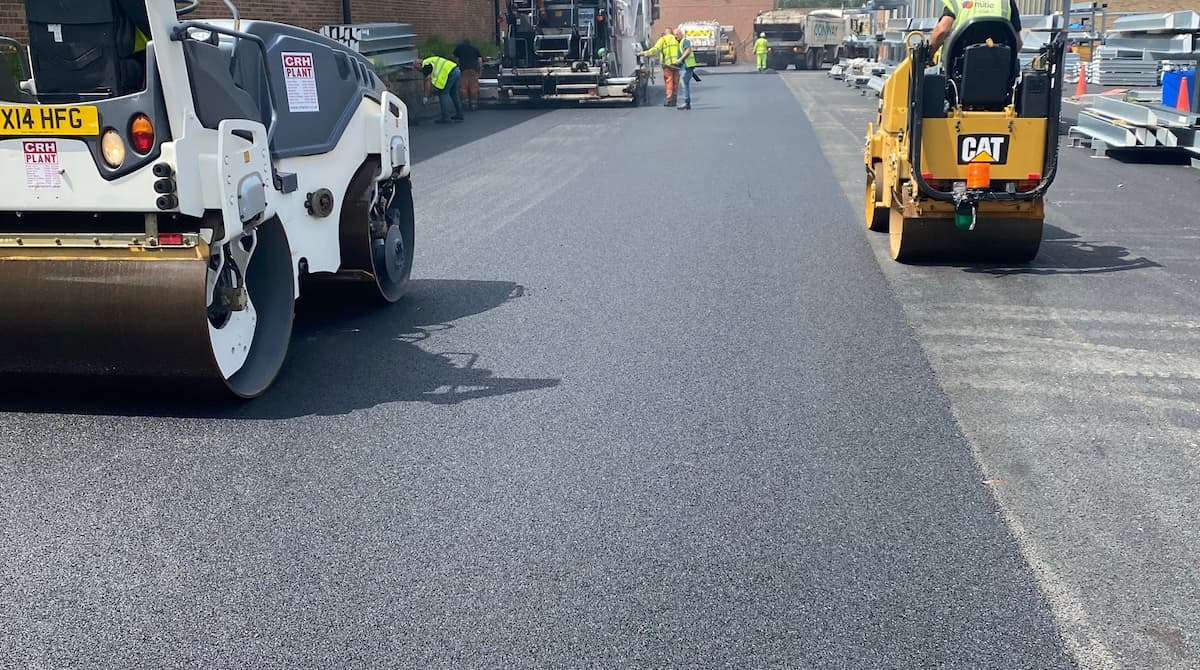
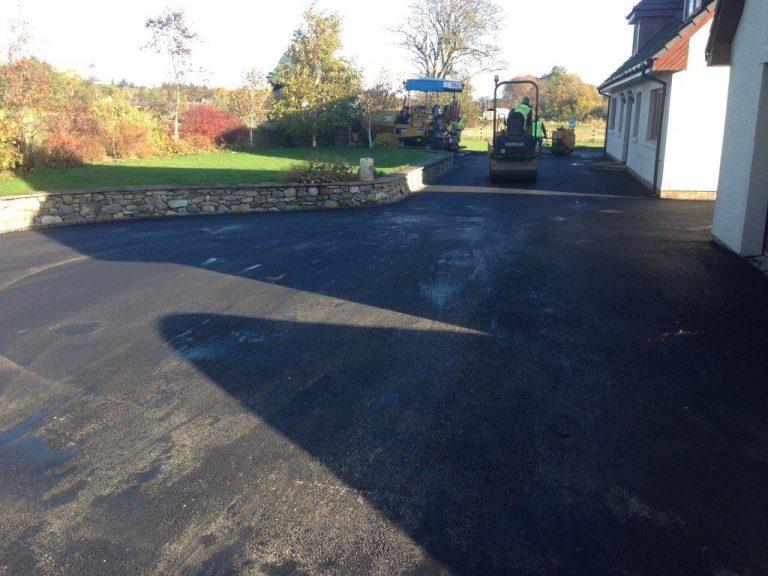
Finishing up with a 10mm close-graded wearing course of dense bitumen macadam, compacted in overlapping passes using tandem steel drum rollers while the material is still at temperature. The wearing course is the final layer over the binder course — determining the long-term durability, texture and skid resistance of the finished surface. Our team works to temperature, not to a clock.
We carry out tarmac surfacing across a wide range of commercial, industrial and private sites. Each type of surface has its own requirements — traffic load, drainage, sub-base depth, material specification — and we tailor our approach accordingly.
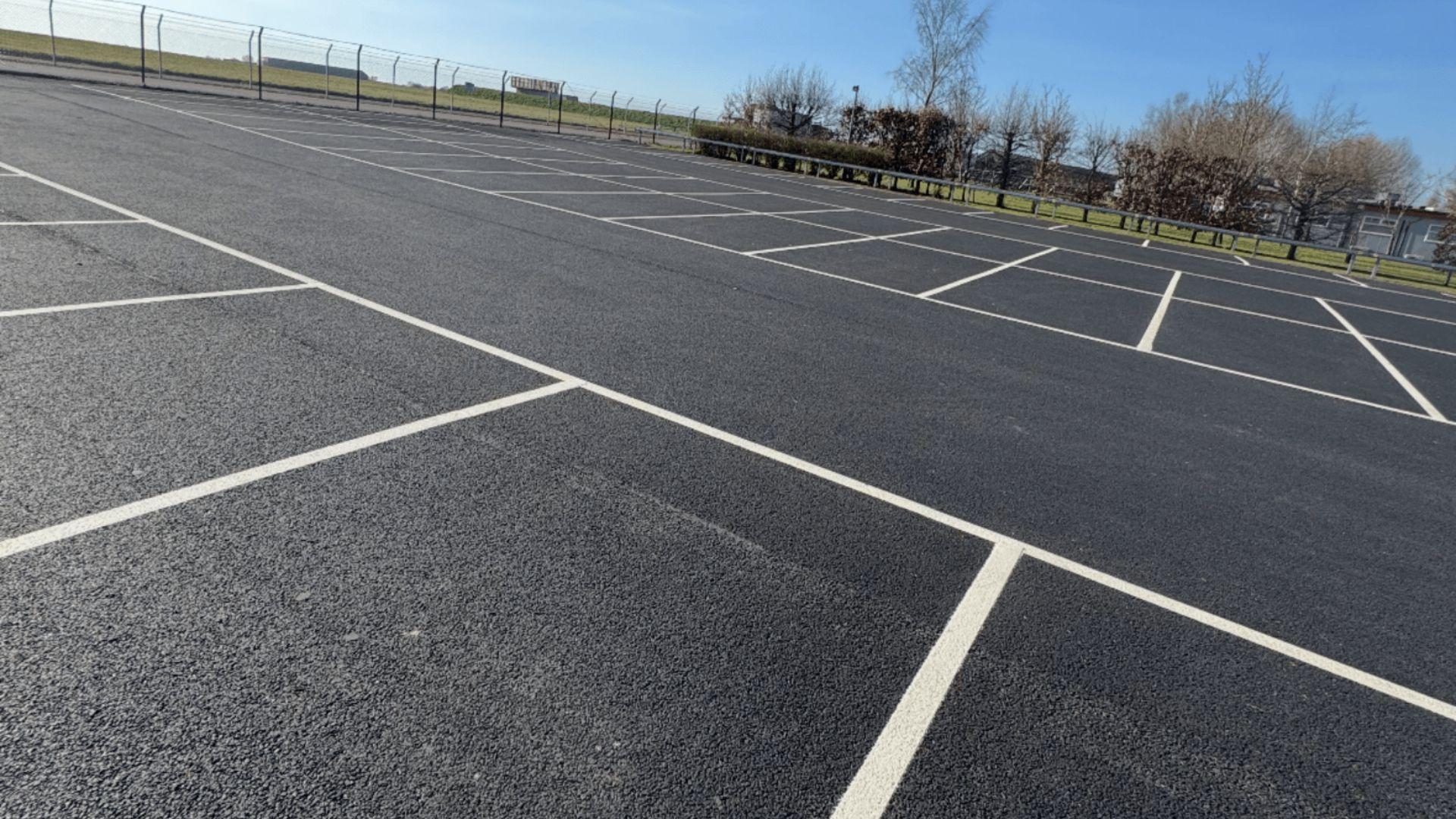
Car parks are one of the most demanding tarmac surfaces — they're constantly exposed to vehicle loads, turning stresses, oil and fuel spillage, and the freeze-thaw cycle. A poorly laid car park will develop cracks, ruts and potholes within a couple of years.
We design and lay car park surfaces to handle the specific traffic volumes and vehicle types involved — from small retail car parks to large multi-bay commercial sites.
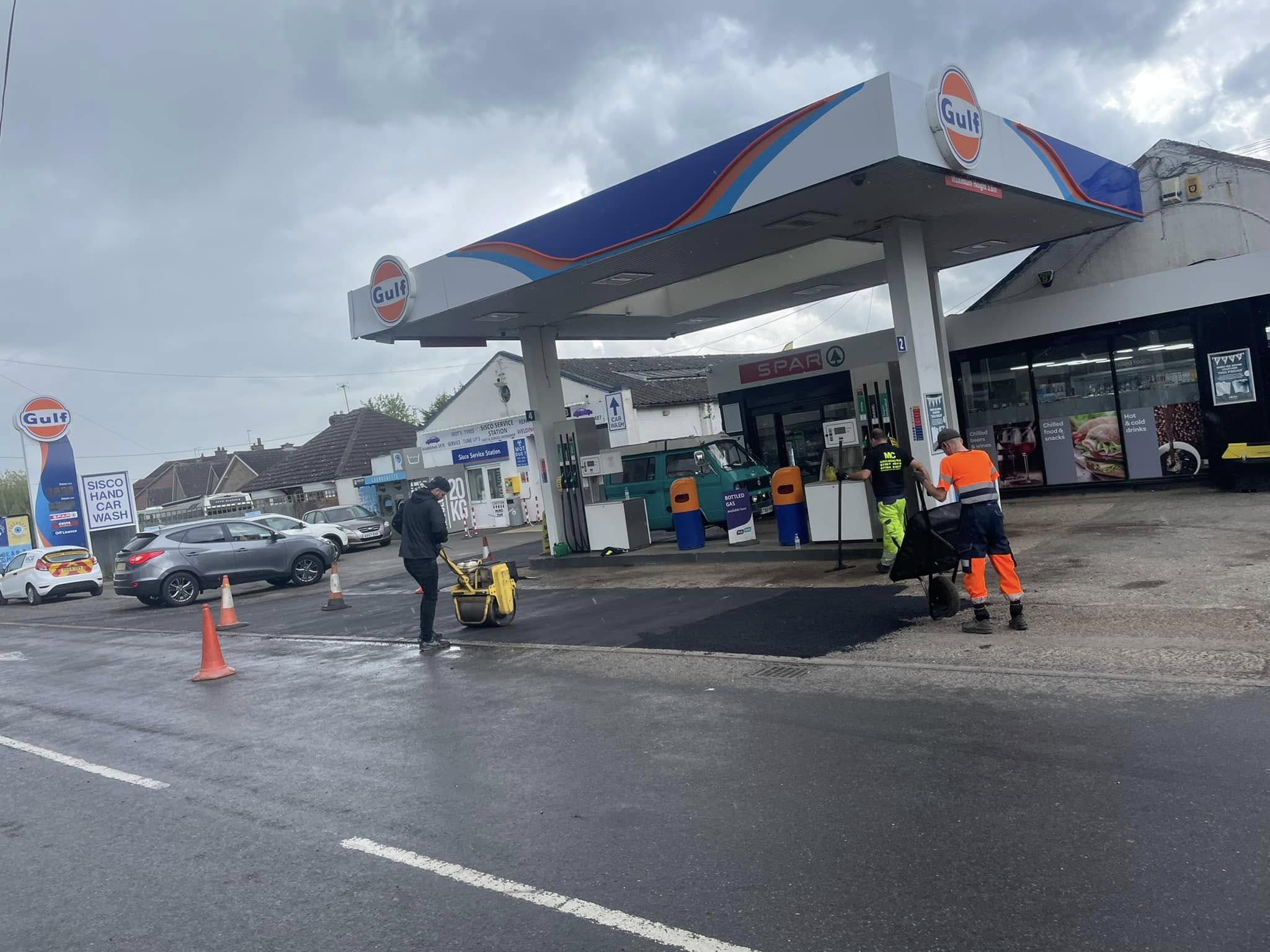
Petrol station and retail forecourts face a unique combination of challenges: constant vehicle movement, exposure to fuel and oil, heavy delivery vehicles, and the need to remain operational at all times. Getting the surface specification wrong here costs far more than getting it right first time.
We use fuel-resistant tarmac products where required and can work out of hours to keep your forecourt open and trading throughout the project.
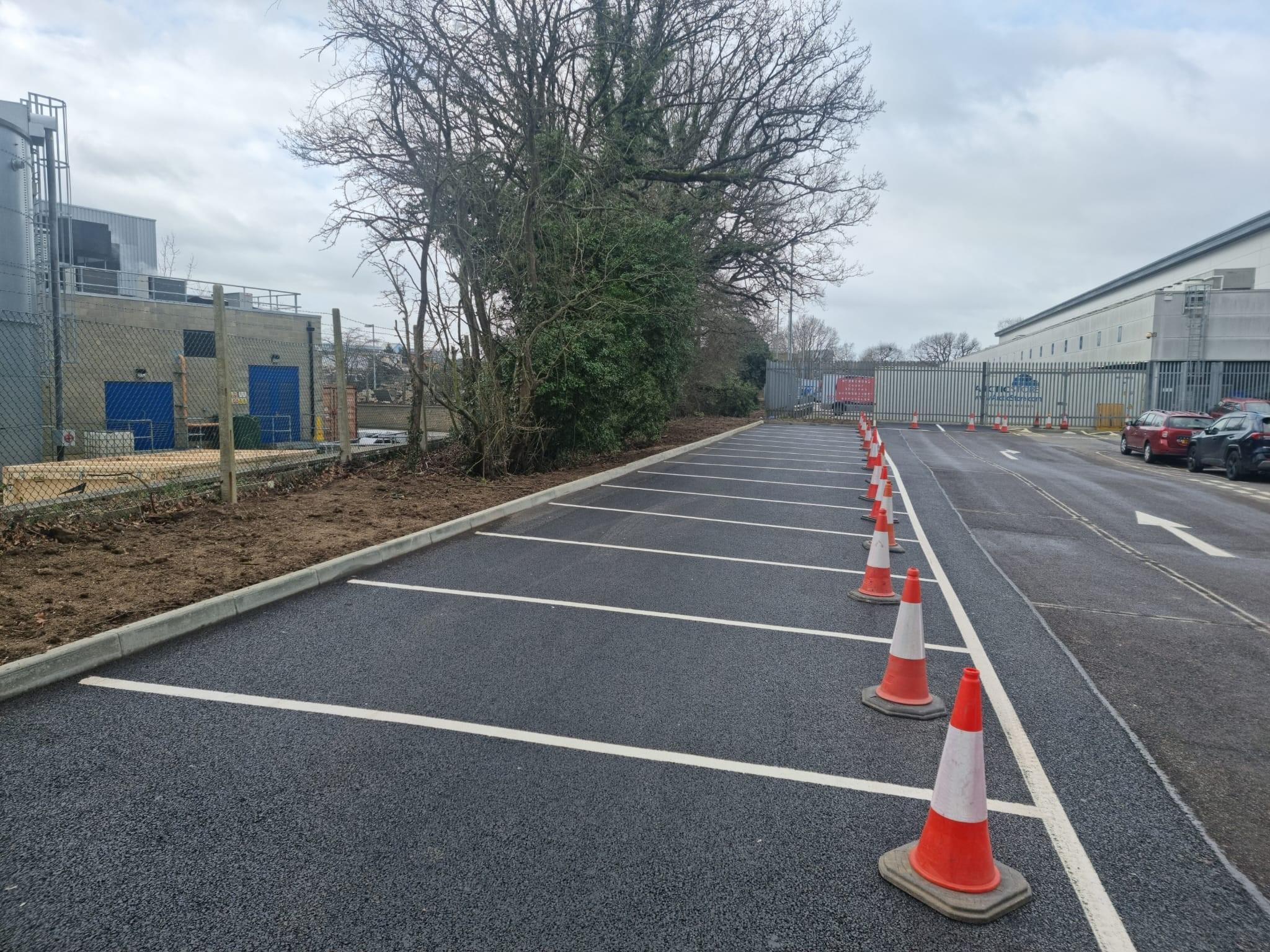
Factory yards and industrial estate roads need to handle some of the most demanding conditions of any tarmac surface — HGVs, forklifts, heavy plant, point loads from containers and skips, and non-stop use in all weathers.
Standard residential or light commercial tarmac specifications are not suitable for these environments. We specify and lay surfaces built for industrial use, using thicker layers and stronger materials throughout.
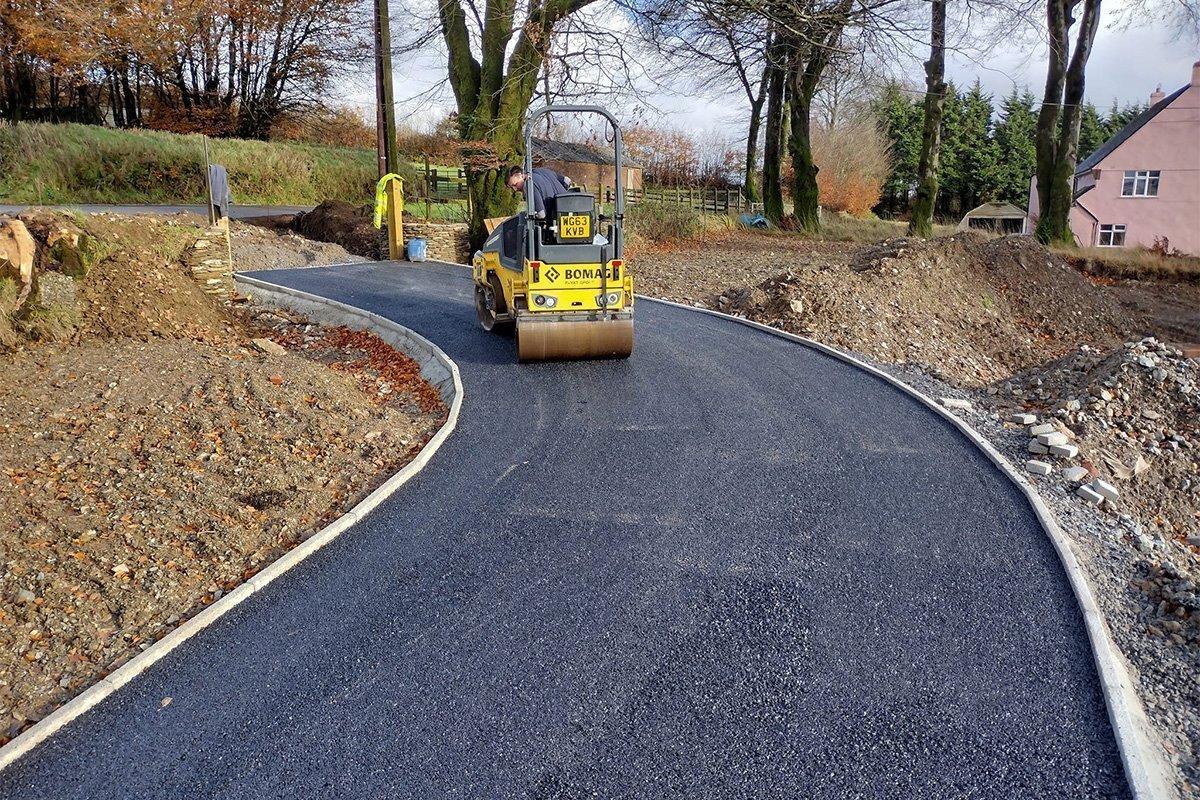
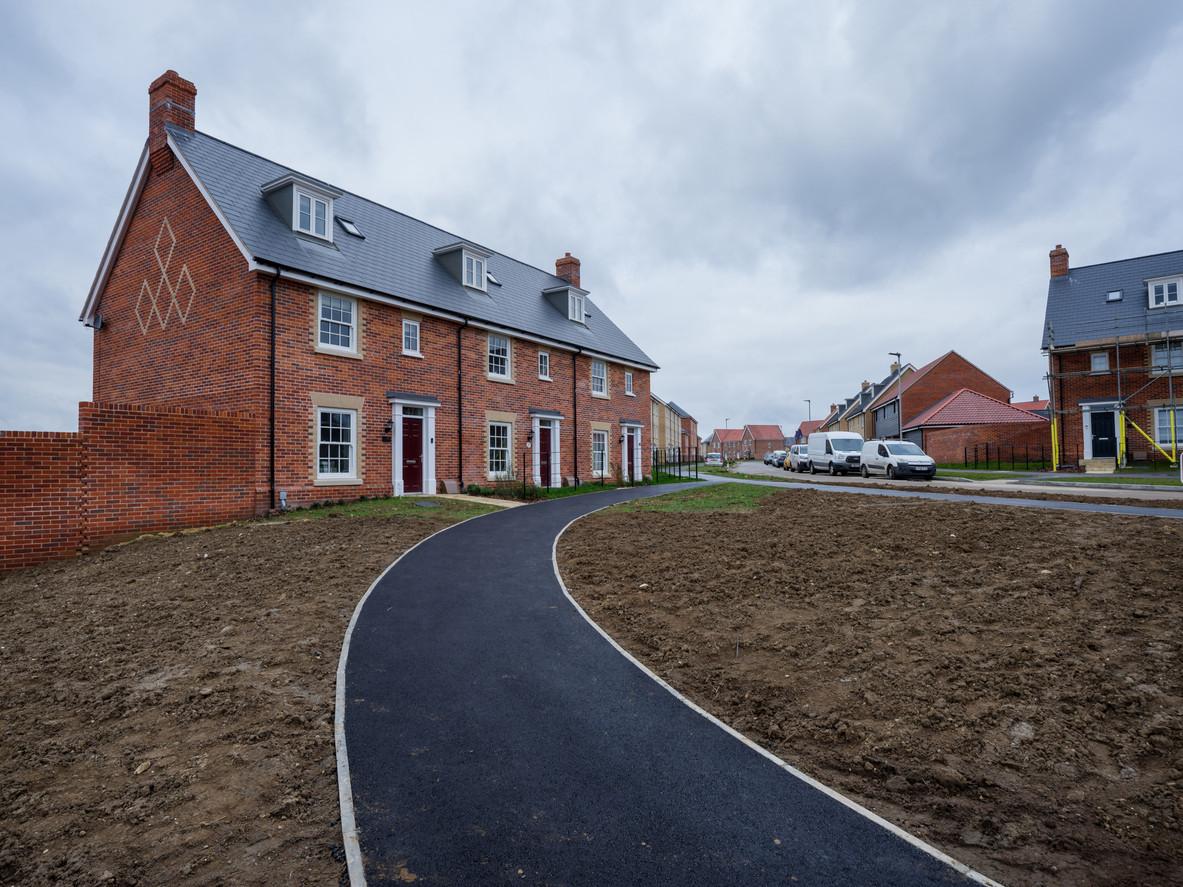
Private access roads, estate roads, business park roads and service roads all require a proper road construction specification — not just a thin layer of tarmac thrown over the existing surface. A properly built road will last for decades with minimal maintenance.
We carry out full road construction including earthworks, sub-base, kerbing, drainage, and surfacing, or we can simply resurface an existing road that has reached the end of its life.
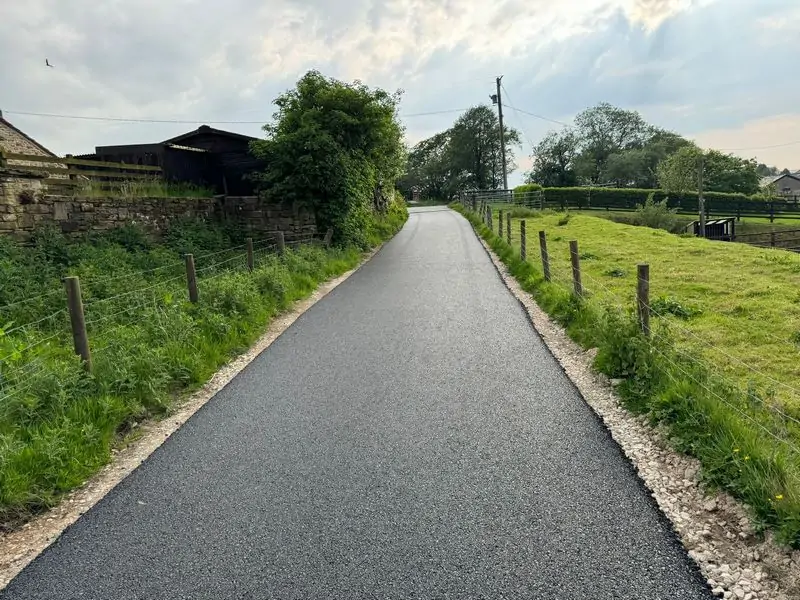
Farm tracks and rural access roads face a tough combination of heavy agricultural machinery, wet and muddy conditions, and a lack of regular maintenance. A well-laid tarmac farm road transforms the day-to-day operation of a farm — safer for vehicles, easier to keep clean, and a lasting asset to the property.
We understand the practical requirements of farm access — from grain trailers and slurry tankers to combine harvesters and livestock wagons — and we build roads that can take the load.
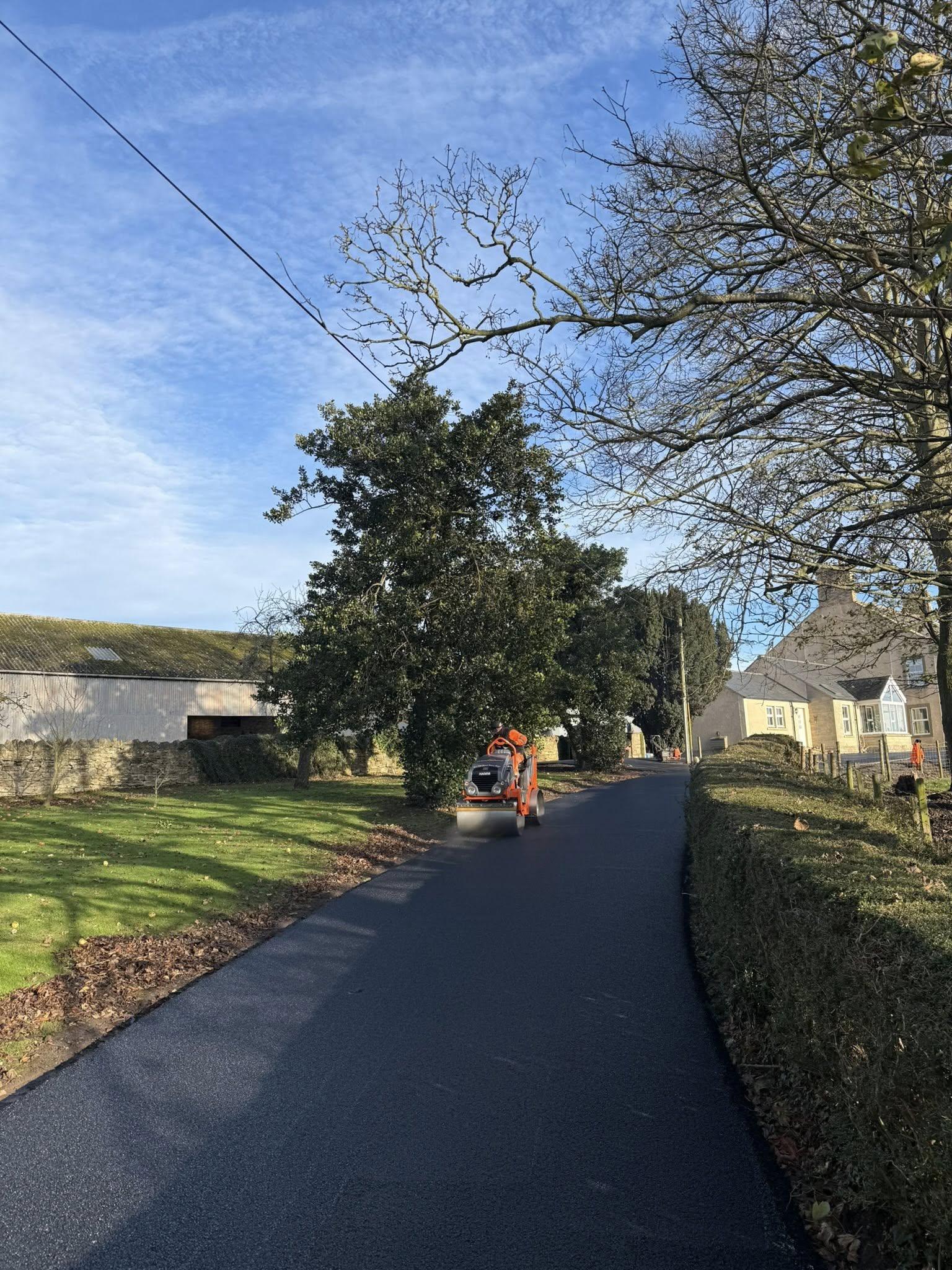
A new tarmac driveway is one of the most cost-effective and durable improvements you can make to a property. Low maintenance, long lasting, and neater than gravel or block paving — tarmac is a practical choice for homes and small commercial premises alike.
We lay driveways with a proper edge restraint, correct falls for drainage, and a clean finish that adds to the appearance of the property. Block paving borders and dropped kerbs can be included as part of the same project.
Not all tarmac is the same. Different surfaces need different materials and specifications — here's what goes into a properly built tarmac surface.
The foundation of any tarmac surface. MOT Type 1 crushed limestone or granite is laid and compacted in layers to create a stable, load-bearing base. The depth depends on the traffic — typically 150mm for domestic, up to 300mm or more for heavy industrial use. A poor sub-base is the number one cause of tarmac failure.
Foundation LayerLaid on top of the sub-base, the binder course is a thick, coarse tarmac layer that distributes load across the sub-base and provides the structural strength of the surface. Typically 40–100mm thick depending on application. Also called base course or roadbase. This is where the load-bearing happens — the wearing course on top is just the finish.
Structural LayerThe top layer of tarmac — what you actually see and drive on. Typically 6mm or 10mm close-graded macadam, laid at 30–40mm thickness. Fine aggregate gives a smooth finish; coarser aggregate provides more texture and grip. The wearing course is also the weathering layer — it protects the binder course below from rain, frost and UV degradation.
Finish LayerHot lay tarmac is mixed and delivered at around 150-160°C and must be laid and compacted while still hot. It gives the best compaction, the strongest bond and the neatest finish. It's what we use for all major surfacing work. Requires a tarmac plant and delivery lorry, so it's most economical for larger areas.
Best for Large AreasCold lay tarmac can be used at ambient temperature and is ideal for smaller repairs and patch work, particularly in wet or cold weather when hot lay isn't practical. It's less strong than hot lay and better suited to temporary repairs or small patch work rather than new surfacing. We use it where it's the right tool for the job — not as a cheaper substitute for hot lay.
Best for Repairs & PatchesApplied between layers and between the new tarmac and any existing surface, tack coat is a bitumen emulsion that acts as a glue — bonding each layer to the next. Without it, layers can delaminate and slip under traffic. It's a small step that makes a big difference to the longevity of the finished surface. We never skip it.
Critical Bonding AgentEvery project follows the same careful process — from initial survey through to final sign-off. No cutting corners, no surprises.
We visit the site, assess the existing ground conditions and take measurements. We look at drainage, access for machinery, any obstructions, and the intended use of the surface. Our quote is detailed and transparent — you know exactly what you're getting and why.
We excavate to the correct depth for the sub-base and tarmac layers. Any soft spots, tree roots or unstable ground is dealt with. Where required, we lay a geotextile membrane before the sub-base to prevent migration of material into soft ground below.
Type 1 crushed stone is laid in layers and compacted using a vibrating roller or plate compactor to achieve a firm, stable base. This is the most important stage — a properly compacted sub-base is what makes the difference between tarmac that lasts 20 years and tarmac that starts failing within 2.
Concrete haunching, precast kerbs, or block edging is installed around the perimeter before the tarmac goes down. Edge restraint is critical — without it, the tarmac edges will crack and break away. Drainage gullies and inspection covers are also set to the correct finished level at this stage.
The structural binder layer of tarmac is laid and compacted. Tack coat is applied first to bond it to the sub-base. The binder course carries the load and provides the mass of the surface — it's laid to the correct thickness for the traffic specification agreed during the survey.
Tack coat is applied to the binder course, then the wearing course is laid and compacted to a smooth, even finish. Levels are checked throughout. The finished surface is inspected for any defects before we move off. Line marking, signage or any other finishing works are then carried out.
We're a family-run business based in the Midlands — not a national contractor who subcontracts locally. When you call us, you speak to the people who will actually do your job. We take pride in our work and our reputation depends on it.
We won't lay a thin skin of tarmac over a poor sub-base and call it done. Every job is specified correctly for its intended use — the right sub-base depth, the right tarmac layers, the right material grade. It costs more to do it right, but it lasts years longer.
All our surfacing work is fully insured and we stand behind the quality of what we lay. If there's ever an issue with workmanship, we come back and sort it. We've built our business on repeat customers and referrals — we don't do shoddy work and disappear.
We understand that most of our commercial clients can't simply shut down while we work. We plan projects to minimise disruption — phased working, out-of-hours shifts, maintaining access during works. We'll agree a programme with you before we start and stick to it.
We don't subcontract the groundworks and just turn up to lay the tarmac on top. We carry out the full project ourselves — excavation, sub-base, drainage, kerbing, surfacing and line marking. One team, one point of contact, full accountability.
Our quotes are detailed and clear. We explain what we're doing and why, what materials we're using, and what the finished product will look like. No vague estimates that balloon once the job starts — what we quote is what you pay, unless you change the spec.
Based in the Midlands, we carry out road surfacing and tarmac laying projects across Birmingham and all surrounding towns. Call us to discuss your project wherever you are in the region.
Free site visit and detailed quote — no obligation.
Request a Free Quote